Introduction
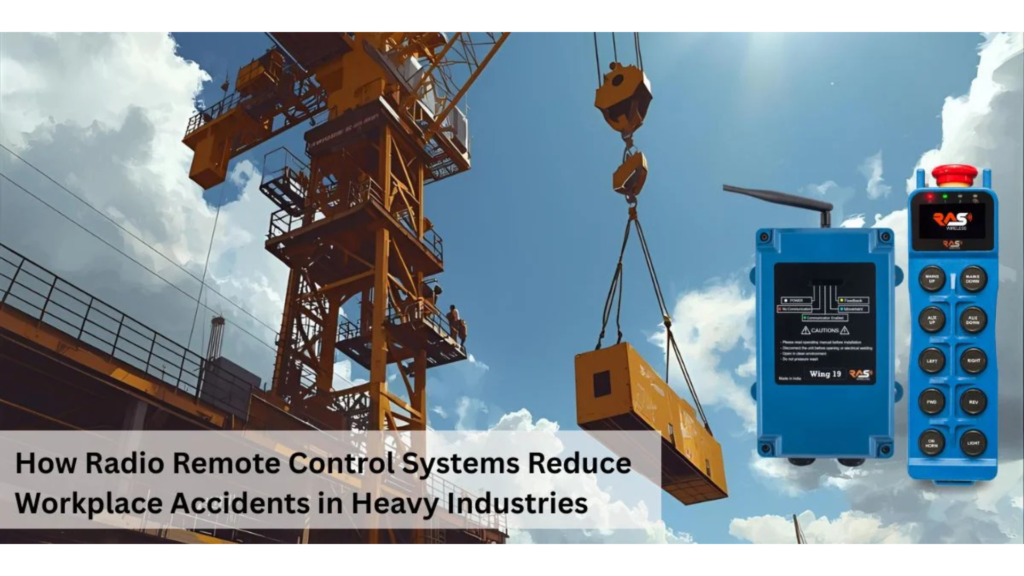
In heavy industries, workplace accidents often occur due to close human interaction with moving machinery. Using radio remote control systems, industries can operate cranes, hoists, and heavy equipment from a safe distance, significantly reducing risk to workers.
Today, radio remote control technology has become a critical safety solution for manufacturing plants, construction sites, steel industries, and material handling operations.
What Is a Radio Remote Control?
A radio remote control is a wireless industrial control system that allows operators to manage machinery using radio frequency signals. Unlike wired pendants, radio remote control systems provide flexibility, safety, and precise operational control.
Common applications include:
- Overhead and EOT cranes
- Hoists and monorails
- Conveyors and lifting equipment
- Construction and industrial machinery
Why Workplace Accidents Happen in Heavy Industries
Accidents in heavy industries usually happen because:
- Operators stand too close to loads
- Poor visibility while lifting or moving materials
- Cable-based controls limit movement
- Slow response during emergency situations
Using a radio remote control directly addresses these safety challenges.
How Radio Remote Control Improves Workplace Safety
1. Safe-Distance Machine Operation
With a radio remote control, operators can control machinery from a safe position. This reduces exposure to:
- Falling or swinging loads
- Crush and pinch points
- Moving mechanical parts
2. Better Visibility and Accuracy
A radio remote control system allows operators to move freely and choose the best viewing angle, leading to:
- Accurate load positioning
- Fewer collisions
- Safer teamwork on the shop floor
3. Instant Emergency Stop Function
Every industrial radio remote control includes an emergency stop button. In dangerous situations, the operator can stop operations instantly, preventing serious accidents.
4. Reduced Operator Fatigue
Traditional controls force operators into fixed or uncomfortable positions. A radio remote control enables relaxed operation, which improves focus and reduces human error.
5. Elimination of Wired Control Hazards
By removing cables and pendants, radio remote control systems eliminate:
- Tripping hazards
- Cable entanglement
- Control damage in harsh environments
6. Secure and Reliable Operation
Modern radio remote control systems feature secure pairing, interference protection, and stable signal transmission—ensuring safe and authorized equipment operation.
Industries Using Radio Remote Control for Safety
- Manufacturing and fabrication units
- Steel plants and foundries
- Construction sites
- Warehousing and logistics
- Mining and power plants
In all these industries, radio remote control systems help reduce accident rates while improving efficiency.
Benefits of Radio Remote Control Beyond Safety
Apart from accident prevention, radio remote control technology delivers:
- Higher productivity
- Reduced downtime
- Improved operator confidence
- Better compliance with industrial safety standards
Choosing the Right Radio Remote Control System
When selecting a radio remote control, consider:
- Signal range and reliability
- Emergency stop and safety features
- Ergonomic and rugged design
- Compliance with industrial safety norms
Conclusion
Implementing a radio remote control system is one of the most effective ways to reduce workplace accidents in heavy industries. By enabling safe-distance operation, better visibility, and immediate emergency response, radio remote control technology protects workers and improves operational efficiency.
Investing in a reliable radio remote control is not just a safety measure—it is a smart industrial decision.