In today’s fast-moving industrial world, efficiency, safety, and flexibility are no longer optional — they’re essential. That’s where industrial wireless remote control systems come into play. These systems have transformed how machines and equipment are operated in sectors like construction, manufacturing, mining, and material handling.
But what exactly is an industrial wireless remote control system? Let’s break it down.
What Is an Industrial Wireless Remote Control System?
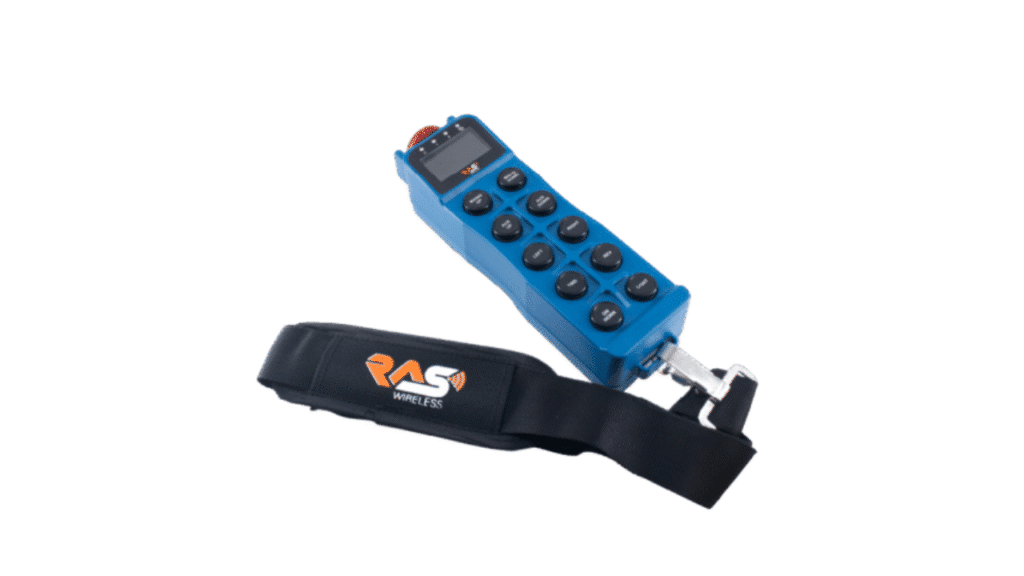
An industrial wireless remote control system is a technology that allows operators to control heavy machinery or equipment from a safe distance — without the need for physical wires or direct contact. It typically includes:
- A Transmitter (Remote Control): Handheld or mounted device used by the operator to send commands.
- A Receiver (on the Machine): Installed on the machine, this device receives the wireless signal and performs the action.
Using radio frequency (RF) or other wireless protocols, these systems enable real-time, two-way communication between the operator and the machine.
Key Benefits of Wireless Remote Control Systems
1. Enhanced Safety
Operators can stand far from hazardous areas, reducing the risk of injury. This is especially useful in applications like mining, crane operations, and construction.
2. Improved Efficiency
Wireless controls eliminate time lost in manual handling or wiring, enabling quicker response times and faster operations.
3. Increased Flexibility
Machines can be operated from multiple locations, offering greater freedom in challenging environments such as large warehouses or open mining zones.
4. Reduced Downtime
Fewer cables mean fewer physical failures. Wireless systems are also easy to install, maintain, and troubleshoot.
Where Are These Systems Used?
At RAS Wireless India, our wireless control systems are designed for:
- Remote control cranes
- Construction equipment
- Material handling systems
- Mining machines
- Industrial automation products
Each application demands high precision and rugged reliability — exactly what our solutions deliver.
How Does It Work?
- The operator sends a command using the handheld transmitter.
- The signal is encrypted and sent via radio waves.
- The receiver on the machine decodes the signal.
- The machine performs the desired function (e.g., lifting, rotating, starting/stopping).
Advanced systems offer feedback, diagnostics, and even customizable functions for more complex operations.
Are These Systems Secure?
Absolutely. At RAS Wireless India, we design our industrial remote control systems with multi-layer safety protocols, including:
- Frequency-hopping spread spectrum (FHSS)
- Emergency stop features
- Signal encryption
- Fail-safe mechanisms
Wired vs. Wireless: Why Go Wireless?
Feature | Wired System | Wireless System (RAS) |
Installation | Complex and time-consuming | Easy, clean setup |
Mobility | Fixed location | Operate from anywhere |
Safety | Limited operator distance | High safety from remote |
Maintenance | Cable wear & tear | Low-maintenance design |
Why Choose RAS Wireless India?
As one of the leading manufacturers of industrial wireless transmitter and receiver systems, RAS Wireless India builds:
- Customizable, rugged solutions
- High-performance products for tough environments
- Smart technology integration for automation
We’re proud to be at the forefront of wireless automation in India.
Conclusion
Industrial wireless remote control systems are reshaping the way we work — making operations faster, safer, and more precise. Whether you’re managing a crane, operating machinery in a mine, or automating a production line, wireless control brings flexibility and control into the palm of your hand.
Looking to upgrade your industrial control systems?
Contact RAS Wireless India today to explore the right solution for your operations.